
Our History
From a 1765 ironworks to a Bible-believing church.
The walls of our church building have stood through Revolution, industry, and revival. This is the story of Hope — and of the Gospel that gathers us here today.
Chapter
The Hope Furnace ca. 1765
The history of our church building begins with the Hope Furnace Mill in Hope, RI. The Hope Furnace was founded by the Brown Brothers (Nicholas, Joseph, John and Moses) who were co-partners in the business with Stephen Hopkins, Israel Wilkinson, Job Hawkins, and Caleb Arnold. The Hope Furnace was an iron furnace mill producing tea kettles, hollowware, nails, hinges, and iron hoops.
Located on the Pawtuxet River south of Salmon Hole, the river provided power for the massive bellows used to heat the furnaces. The surrounding woodlands were used for charcoal production and local farmers provided the stone that was heated and melted with the ore from Oaklawn Ave in Cranston. The ore, charcoal, and limestone were carted uphill in horse-drawn wagons. At this time about seventy men were employed there as founders, colliers (coalminers), woodchoppers, molders, firemen, carters and coalers of wood, diggers and carters of ore. Workers were paid poorly receiving about 1/4 of their pay in goods.
By 1768 the Furnace was producing pig iron which was sold in England in exchange for English goods. Seventy-six cannons were cast for the war effort. One of these original cannons remains in front of the Hope Library.
In 1806, Hope Furnace was sold at auction to Silvanus Hopkins and Jabez Bowen who renamed the mill the Hope Manufacturing Company. The Hope Manufacturing Company functioned as a cotton spinning mill. In 1820, power looms were introduced at the mill and by 1832 the Hope Manufacturing Company employed fifteen hundred workers with nearly a third being women and another third children and teenagers as young as age nine.
In 1821 the mill was purchased by Ephraim Talbot with "all lands, tenements, factories, building, privileges of water, also all the machinery, looms, tools or apparatus attached to the factory, die House, machine shop, weaving room, picking house, grist mill and the other buildings hereby conveyed, and about 29 acres" included.
By 1844, John Carter Brown, Moses B. Ives, Robert H. Ives, Charlotte R. Goddard and William Kelly bought the company. All were descendants of the Nicholas Brown family and built upon the Brown & Ives holdings that included the Blackstone Company in North Smithfield, the Lonsdale Water Power Company and the Lonsdale Mills in Lincoln. In 1847 the mill was incorporated as the Hope Company.
Chapter
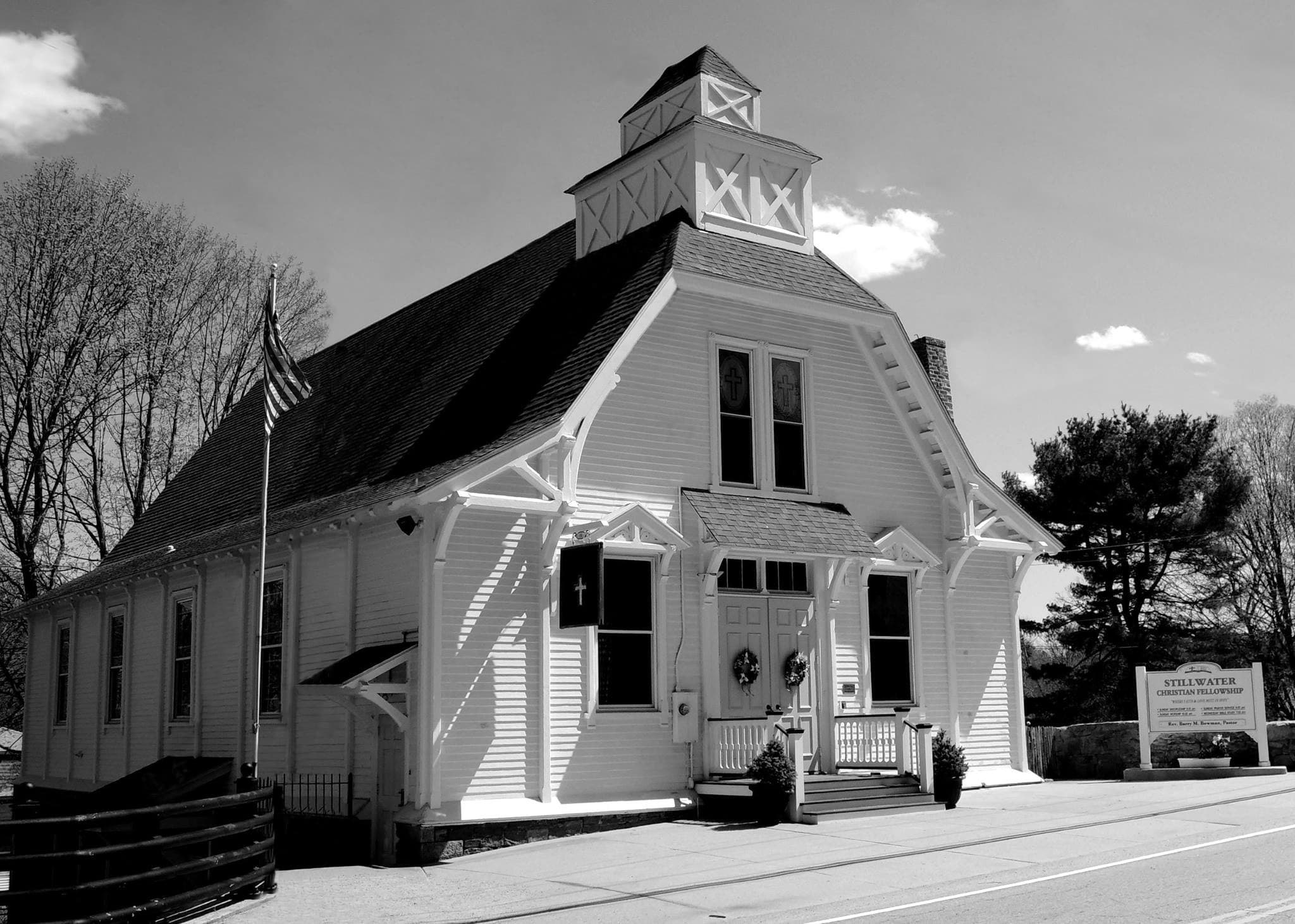
Hope Church Founded ca. 1875
Hope Church was the vision of Superintendent Samuel G. Allen, a devout Methodist. Before its construction, early religious services by ministers of various denominations, including George Champlain, a black preacher and elder of the Warwick and East Greenwich Free Will Baptist Church, were held in the Old Picker House at the mill complex.
Today
Still Water Christian Fellowship continues the legacy.
Today the same building rings with the preaching of God’s Word, the singing of saints, and the prayers of a church family in Hope, Rhode Island.